Showing posts with label pop culture. Show all posts

Wednesday, May 13, 2026

What Would The Pitt Look Like in Our Field?

by Amber Schroeder, Executive Director, ATSA

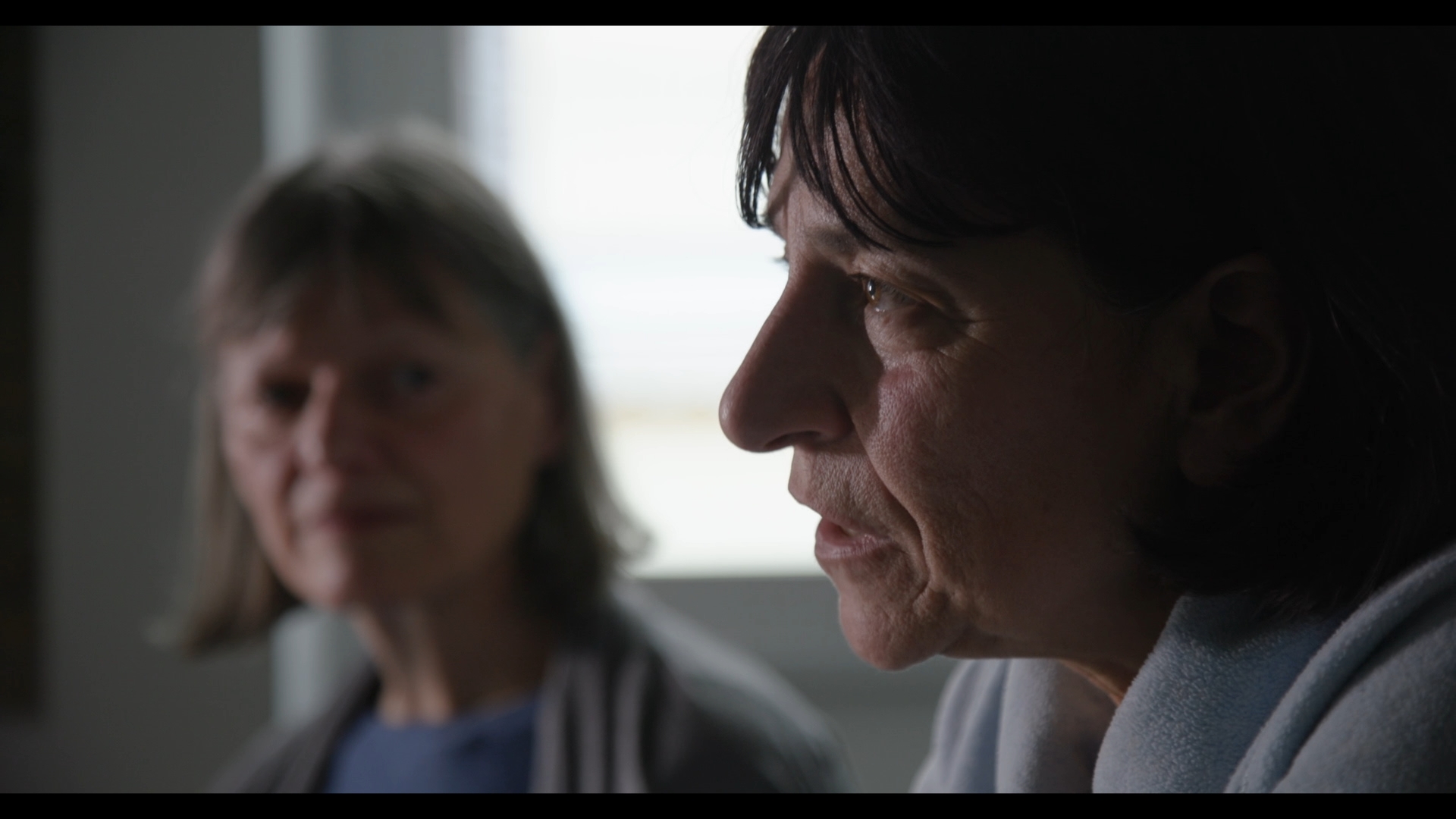
I recently finished the latest season of The Pitt and kept thinking about why it works so well. It isn’t just the pacing or the medical crises. It’s the way the show captures human complexity. Nobody is reduced to a stereotype. The staff are competent but flawed. Patients are messy. Systems fail. Emotions leak into decision-making. Ethical questions rarely have clean answers. The show trusts the audience to sit with ambiguity instead of constantly reassuring them who’s right and who’s wrong.


While watching it, I found myself wondering: what would a show like this look like in our field? Not the sensationalized version built around monsters—the real version.


It would look like clinicians sitting in their cars for ten extra minutes before going home, trying to emotionally transition from hearing disclosures of sexual violence to helping their own kids with homework.


It would look like probation officers and therapists arguing over whether a client is destabilizing or simply terrified.


It would look like treatment teams debating a single sentence in a risk report, because everyone in the room understands that one adjective can alter the trajectory of a person’s life.


It would look like someone in our field missing a meeting because they spent the morning supporting the spouse of a former client who died by suicide—someone who would’ve been publicly reduced to “an offender,” but who was also a partner, a struggling person, and one of the few non-justice-involved clients that clinician was treating. And now the clinician is left carrying the questions this field quietly lives with every day: Did I miss something? Could the outcome have changed? How do you hold grief, accountability, risk, and humanity all at once?


That is what our field actually looks like.


A realistic show about sexual harm prevention wouldn’t revolve around dramatic courtroom speeches or brilliant profilers solving crimes. It would center on system strain, burnout, ethical ambiguity, public fear, and small victories nobody outside the field ever recognizes.


One episode would revolve entirely around whether someone should be returned to custody after a concerning disclosure. Half the team would argue community safety demands it. The other half would argue it could increase long-term risk. Nobody would fully know who was right.


Another episode would follow a therapist trying to stop a family from forcing out their adolescent child after exhibiting problematic sexual behavior, because homelessness and shame are risk factors too.


There would be no clean endings. No perfect heroes. Just people trying to reduce harm with incomplete information, inside systems that are emotionally and politically exhausting.


And importantly, it would expose something deeply uncomfortable for the public: many professionals in this field genuinely care about the people they work with. Not because they minimize harm, but because they understand prevention requires engaging with human beings—not simply condemning them. They trust the evidence showing people are capable of change, risk can be reduced, and prevention is possible even in situations the broader public often views as hopeless.


That tension is the emotional core of this work.


We hold accountability and compassion at the same time. We sit with victims and survivors, families, clinicians, incarcerated people, and communities carrying different forms of pain. We know some people remain dangerous. We also know hopelessness is not a prevention strategy.


There is something else the public rarely sees: this field has an evidence base.


We know more than people think we do about risk reduction, treatment engagement, protective factors, supervision strategies, and prevention. But evidence often struggles to compete—politically—with fear, outrage, and policies designed around what voters emotionally want to hear rather than what research supports.


That disconnect wears on people in this field.


Most professionals doing this work aren’t trying to win ideological battles. They’re trying to answer operational questions every day:

  • Who is escalating?
  • Who is isolating?
  • Who lost housing?
  • Who stopped coming to treatment?
  • Who is too ashamed to disclose what they need help with?
  • Who on staff is burning out?
  • Who believes change is possible?


The Pitt succeeded because it trusted audiences to tolerate complexity instead of constantly reassuring them who the heroes and villains were. Our field deserves that same honesty.


Because sexual harm prevention isn’t built in dramatic moments. It’s built in thousands of imperfect human interactions—carried out by professionals working inside systems that ask them to absorb fear, grief, uncertainty, and moral ambiguity every single day.


That’s the real story.


Monday, April 27, 2026

Documentary Roundup: Sexual Abuse & Human Trafficking on Screen

Sexual abuse and human trafficking are being examined more openly than ever in documentary filmmaking, with a noticeable rise in projects over the past year. What we are seeing is, in many ways, an expansion of the true crime genre — but with a meaningful shift. Audiences are no longer satisfied with the what and the who. They are increasingly asking why this harm occurs and, more importantly, how do we stop it. Those two questions sit at the heart of ATSA's work and the work of our members.

Practical Insight for Prevention-Focused Treatment

1They highlight pathways to offending.

Across different settings, there are recurring patterns such as gradual boundary violations, normalization within peer groups, misuse of authority, and lack of accountability. These patterns can inform risk assessment and intervention strategies.

2They show the role of environments and systems.

Abuse does not occur in isolation. Organizational culture, supervision gaps, and bystander inaction are often part of the picture. This reinforces the importance of addressing not just individual behavior, but context.

3They demonstrate missed opportunities.

Many cases include earlier warning signs that were overlooked. Understanding these moments can help shape earlier intervention and relapse prevention planning.

4They reflect increasing public awareness.

As these stories become more visible, individuals in treatment may be influenced by them. This can create openings for discussion around accountability, empathy, and the real-world impact of harm.

⚠Content Advisory: Many of these documentaries include sensitive material and may be difficult to watch. Reader and viewer discretion is advised.

Recent & Notable Documentaries

2026
TRUST ME
The False Prophet
Netflix

A cult expert and her filmmaker husband infiltrate the inner circle of Samuel Bateman, a self-proclaimed FLDS prophet who took multiple "wives" — including underage girls — and orchestrated abuse to consolidate control. Focused on coercion, manipulation, and abuse within a religious group, including how power and control are established and maintained.


2026
KEEP QUIET
AND FORGIVE
PBS · Independent Lens

Lizzie, a former Minnesotan Amish woman, breaks decades of silence about her sexual assault and reports her case to police, sparking a nationwide movement of Amish and Mennonite survivors. Highlights how cultural and religious expectations to "forgive and forget" can function as system-level barriers to disclosure, accountability, and prevention.


2025
SEAN COMBS
The Reckoning
Netflix

A four-part docuseries, executive produced by Curtis "50 Cent" Jackson, that traces the rise and fall of Sean "Diddy" Combs through interviews and exclusive footage tied to the sexual misconduct allegations against him. Useful for examining how celebrity, wealth, and inner-circle loyalty can shield long-running coercive behavior, and how survivor accounts surface only after a power structure begins to crack.


2025
PREDATORS
Paramount+

Director David Osit revisits Dateline's To Catch a Predator, tracing the people who made it, the men it captured, and the ethical fallout of turning real-life trauma into spectacle. Examines media-driven approaches to confronting offenders and raises questions about deterrence, public exposure, and behavior change.


2025
NUNS vs THE VATICAN
Video-on-Demand

A group of Catholic nuns — including former Sister Gloria Branciani — publicly accuse priests, including Father Marko Rupnik, of sexual and spiritual abuse and confront the Vatican's hidden patterns of cover-up. Explores abuse within a closed system and the role of authority, secrecy, and institutional response.


Nuns vs The Vatican
*Trailer unavailable


2025
BAD INFLUENCE
The Dark Side of Kidfluencing
Netflix

A three-part investigation in which former members of YouTuber Piper Rockelle's "Squad," along with their parents, detail accounts of exploitation and abuse by her manager-mother, Tiffany Smith. Useful for understanding emerging digital pathways to grooming and the unregulated environments that enable harm, including the increasingly blurred line between parent and producer.


2025
GROOMED
A National Scandal
Channel 4

Filmmaker Anna Hall draws on two decades of investigative work on UK gang grooming, as five women share on-camera accounts of grooming, rape, and exploitation — and the police and social services failures that allowed it to continue. Directly relevant to grooming dynamics, missed warning signs, and the institutional response gaps that allow harm to continue.


*Trailer available only in the UK


2024
QUIET ON SET
The Dark Side of Kids TV
Max · Discovery+

A docuseries examining the working environment behind several Nickelodeon shows of the late 1990s and 2000s, with first-hand accounts from cast and crew about misconduct, exploitation, and on-set abuse. Includes accounts of misconduct, boundary violations, and organizational blind spots that allowed harm to occur.


2024
BLACK BOX DIARIES
Limited Theatrical · Festivals

Japanese journalist Shiori Ito documents her own multi-year investigation and prosecution of a prominent broadcaster who sexually assaulted her, blending vérité footage, secret recordings, and first-person video. Highlights systemic barriers to accountability and the social dynamics that can discourage reporting.


2024
BURNING SUN
Exposing the Secret K-pop Chat Groups
BBC Platforms

A BBC Eye investigation into how prominent K-pop stars used private group chats to share evidence of sexual crimes, and the journalists who pushed the story into public view despite industry retaliation. Offers insight into group dynamics and the normalization of harm within a large-scale exploitation, trafficking, and coordinated abuse scandal.


2024
THE PROGRAM
Cons, Cults, and Kidnapping
Netflix

Director Katherine Kubler reunites with former classmates from Academy at Ivy Ridge, a "behavior modification" facility marketed as a boarding school, to expose the abusive practices of the troubled-teen industry. Highlights closed-system dynamics, supervision failures, and the long-term impact of unregulated youth-treatment environments.


2023
GREAT PHOTO,
LOVELY LIFE
HBO · Max

Photojournalist Amanda Mustard spends eight years investigating decades of sexual abuse committed by her grandfather, a trusted local chiropractor, weaving family interviews and archival home video into the inquiry. Offers insight into intra-familial dynamics, intergenerational impact, and how community standing can shield long-running offending behavior.


RECENT
TRAFFICKED
with Mariana van Zeller
Nat Geo · Hulu · Disney+

Award-winning journalist Mariana van Zeller embeds with operators inside global black markets — including human trafficking and sexual exploitation networks — to trace how illicit ecosystems function from the inside. Includes reporting on trafficking networks and the broader ecosystems that support exploitation.


Monday, December 15, 2025

Power, Control, and the Misunderstanding of Grooming: What the Diddy Documentary Reveals About Sexual Abuse Dynamics

By Amber Schroeder, ATSA Executive Director 

While watching the Netflix documentary Sean Combs: The Reckoning with my partner over the weekend, we kept pausing the film. Each time another person described witnessing Diddy causing or directing others to cause harm while insisting that they themselves were exempt from similar harm, my partner would turn to me, incredulous. “What’s wrong with people?” he asked at one point, genuinely baffled.

It sparked a long conversation between us about why this reaction is so common: how individuals can watch others be mistreated, recognize the danger on some level, and still think, “that won’t happen to me.” As those of us in the field of sexual abuse prevention know, this response is not a personal failing —it is the predictable outcome of grooming, power, and environmental conditioning.


Most Sexual Abuse Is Not Paraphilia-Driven: What Research Actually Shows

Public narratives often conflate sexually abusive behavior with paraphilic disorders such as sexual sadism, voyeurism, exhibitionism, or pedophilia. While these disorders are relevant for a subset of individuals, research consistently shows that most sexual abuse is not motivated by atypical sexual interests. Decades of empirical findings identify more common drivers, including:
  • entitlement and beliefs supporting the misuse of power
  • antisocial traits and behavioral dysregulation
  • cognitive distortions related to control and objectification
  • opportunism enhanced by permissive or unaccountable environments
Meta-analytic research (Hanson & Morton-Bourgon, 2005; Kingston et al., 2008; Mann, Hanson & Thornton, 2010) confirms that paraphilic interests account for only part of sexual offending. In many cases, sexual behavior is instrumental—deployed to dominate or punish—rather than arising from a paraphilic preference. Distinguishing these pathways is essential for accurate risk assessment and treatment.


Grooming Creates the Illusion of Safety—Until the Moment It Doesn’t

One of the most striking themes in the documentary is the number of people who said, in one form or another: “I saw how he treated others, but I didn’t think it would happen to me.” This is precisely how grooming works.
Research describes grooming as a progressive, context-shaping process involving:
  • selective attention, favors, and elevation of status
  • gradual normalization of boundary violations
  • intermittent reinforcement that creates psychological dependency
  • manipulation of organizational or social environments
(Craven, Brown & Gilchrist, 2006).
In high-power contexts, grooming becomes environmental. Systems, not just individuals, are conditioned to reinterpret harm, rationalize behavior, or defer to authority. This systemic distortion is why people can observe clear warning signs in others yet perceive themselves as safe: the entire environment is engineered to obscure risk.


Why This Distinction Matters for Intervention, Treatment, and Prevention

Misunderstanding power-driven sexual abuse as paraphilia-driven leads to interventions that miss the mechanisms of harm. Research has long shown that sexual abuse is most often associated with entitlement, cognitive distortions, antisociality, emotional dysregulation, and environments that reward control. When viewed through this lens, the documentary becomes less a story of disbelief and more a demonstration of preventable dynamics that aligned exactly with what the research predicts.
To translate this evidence into practice, our field must confront the systemic beliefs that obscure risk and ensure prevention frameworks reflect the realities of how sexual harm develops. This includes:
  • embedding research-based distinctions between paraphilic and non-paraphilic pathways into case formulation
  • directly addressing entitlement, coercive control, and distorted beliefs within treatment
  • designing organizational safeguards grounded in research on grooming and environmental risk factors
  • expanding early-intervention strategies that identify coercive or boundary-violating behavior before it escalates
The documentary reinforces a central finding of the field: sexual abuse becomes predictable when systems rely on assumptions rather than evidence. As researchers, clinicians, and prevention professionals, our responsibility is to challenge those assumptions, elevate what the science tells us, and ensure interventions and prevention efforts disrupt these dynamics long before anyone is left saying, “I didn’t think it would happen to me.”